 serverbastion.com

All-Flash vs Hybrid Storage: How to Choose in 2026
Storage buying guide · Updated 2026-09-29 · 9 min read
Short answer: which storage do you actually need?
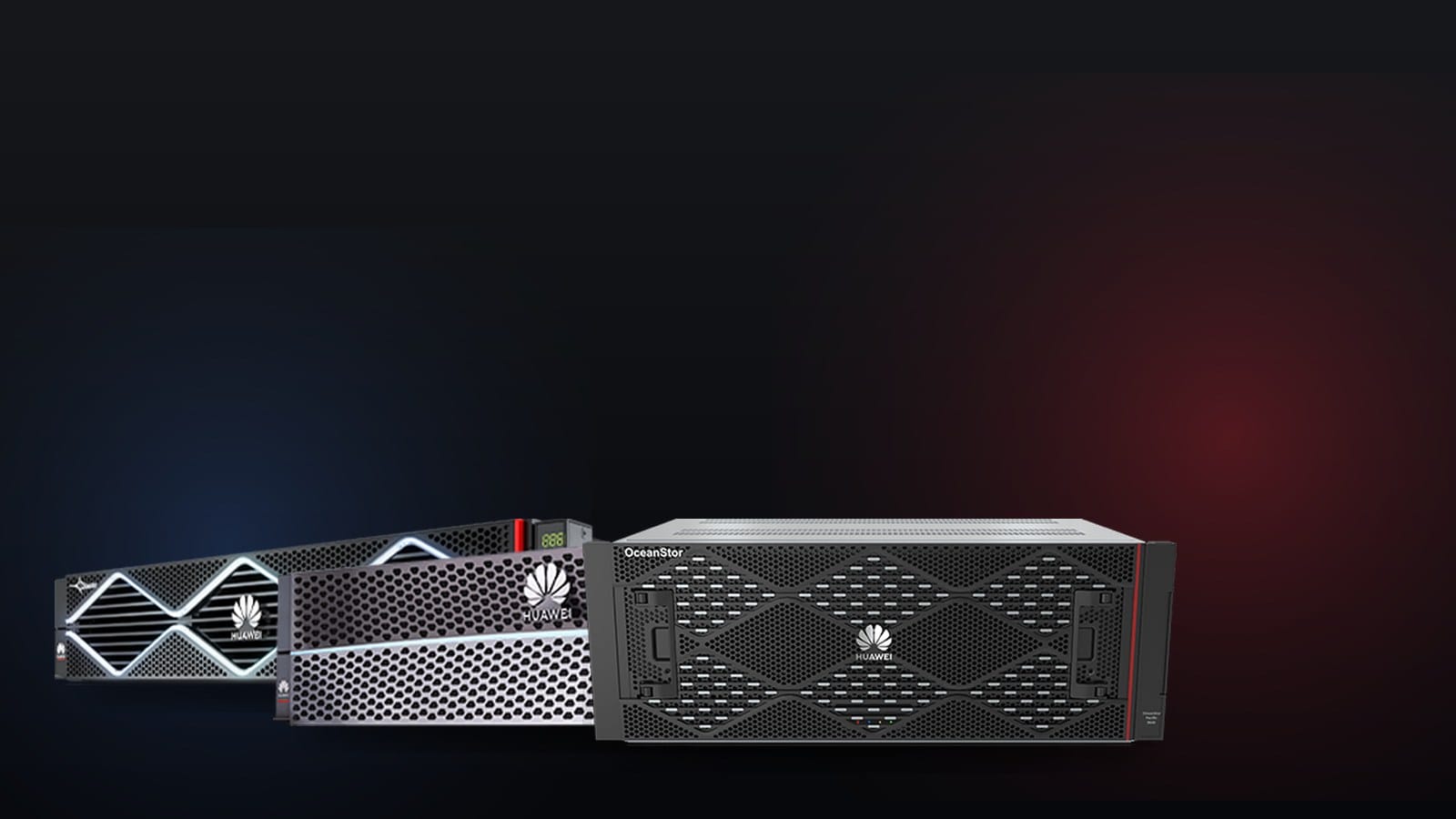
If your workload is latency-sensitive and most of the data is actively read and written — databases, virtual desktops, ERP and online transaction systems — an all-flash array such as the Huawei OceanStor Dorado pays back quickly through faster response times and simpler management. If a large share of the data is cold or rarely accessed and budget per terabyte is the main constraint, a hybrid array such as the OceanStor 5310, which combines SSD caching with high-capacity HDDs, is the rational choice.
There is no universal winner. This guide compares the two on the dimensions that actually drive a purchasing decision, and shows where distributed scale-out storage fits.
What is all-flash storage?
An all-flash array uses solid-state drives for the entire working set, with no mechanical disks in the data path. Modern systems add deduplication and compression inline, so the effective capacity is higher than the raw terabytes suggest. The defining traits are sub-millisecond latency, very high IOPS and predictable performance even when the array is busy.
Because there are no spinning drives, all-flash systems also use less power and rack space per unit of performance and have fewer components that can mechanically fail. The trade-off is higher upfront cost per raw gigabyte.
What is hybrid storage?
A hybrid array mixes a smaller amount of flash with a larger pool of hard-disk drives. Intelligent tiering or SSD caching places frequently accessed data on flash while cold data sits on economical HDDs. The result is flash-like response for the active portion of a dataset at a much lower cost per terabyte overall.
Hybrid storage is the established choice for general-purpose consolidation, file services, backup-to-disk and mixed workloads where only part of the data is hot at any moment. It does not match all-flash on worst-case latency, so it is a poor fit for databases with strict response-time requirements.
Head-to-head: the dimensions that matter
| Dimension | All-flash | Hybrid |
|---|---|---|
| Latency | Sub-millisecond, highly consistent | Low for hot data, variable for cold data |
| IOPS / throughput | Very high | Good, depends on the flash cache hit rate |
| Cost per raw TB | Higher | Significantly lower |
| Dedupe / compression | Always-on, very effective | Effective on the flash tier |
| Power, cooling, space | Lower per unit of performance | Higher for the same IOPS |
| Best workload | Databases, VDI, mission-critical apps | File, backup, archive, mixed consolidation |
Where distributed and scale-out storage fits
Neither a traditional all-flash nor a hybrid dual-controller array is the best answer when you need to scale capacity and performance horizontally across many nodes, or when you need a single pool for file, object and big-data workloads. A distributed system such as the OceanStor Pacific adds nodes as data grows into petabyte-scale ranges while keeping performance scaling with capacity.
Typical drivers are analytics, media repositories, large-scale backup and archives, and environments that need multi-protocol access. If your requirement is measured in tens of terabytes for a single application, a conventional array is simpler; if it is measured in petabytes with continued growth, evaluate scale-out early.
A practical way to size the decision
- Profile your active data: how much is read or written frequently, and what response time does the application require?
- Apply realistic deduplication and compression ratios to the all-flash effective capacity before comparing prices.
- Check growth over three years, not today’s capacity, and include power, space and management effort in the cost.
- Keep hot and cold workloads on the tier that matches them; one array for everything is rarely optimal at scale.
When in doubt, the conservative default is all-flash for the production database and virtualization tier, hybrid for file and capacity, and distributed storage only where scale or multi-protocol demand is real. Send us your workload profile and retention numbers and we will model the effective capacity and cost of each approach.
Frequently asked questions
Is all-flash always more expensive than hybrid?
Not once effective capacity is compared. All-flash arrays apply inline deduplication and compression, and they save power, rack space and management effort. For active, redundant datasets the all-flash total cost over three years can be close to hybrid even though the raw price per terabyte is higher.
Can I run databases on a hybrid array?
You can, but it is not ideal for latency-sensitive production databases. The flash cache helps for frequently hit data, yet reports, batch jobs and cold reads that miss the cache hit spinning disks. Mission-critical databases and VDI are safer on all-flash.
How long does an all-flash array last?
Enterprise all-flash systems are designed for multi-year service lives, and the flash in current arrays is far more durable than early consumer SSDs. Under typical enterprise write loads, vendor endurance ratings comfortably cover a five-year refresh cycle, with monitoring and spares.
What is the difference between hybrid and converged storage?
Hybrid describes the drive mix of flash plus HDD inside one array. Converged or hyper-converged describes an architecture that combines storage, compute and sometimes networking. They answer different questions and should not be compared on price alone.
Do I still need backup if I have all-flash?
Yes. Primary storage, even highly redundant all-flash, is not a backup. It protects against drive or controller failure, not against deleted data, corruption, ransomware or site loss. Retain separate backup and, where needed, an offline or immutable copy.
When should I choose distributed storage instead?
Choose distributed scale-out storage when capacity will grow into petabytes, when performance must scale by adding nodes, or when file, object and big-data access must share one pool. For a single application under a few tens of terabytes, a dual-controller all-flash or hybrid array is simpler and cheaper.
Need help with your configuration or order?
Send us your workload, quantity and destination. A specialist will return a configured specification, channel price and lead time — usually within one business day.

WeChat
Scan the QR Code with wechat