 serverbastion.com

How to Buy Servers from China Without Getting Burned
Buyer-protection guide · Updated 2026-09-19 · 10 min read
Short answer: can you safely buy servers from China?
Yes, with conditions. Buyers across Europe, Southeast Asia, the Middle East and the CIS source new Dell PowerEdge and other x86 servers from China channel suppliers every quarter, and the failed deals follow a pattern. Nobody checked the service tags. The proforma invoice named a model but not the CPU stepping or controller. The full balance was wired before inspection. The warranty lived only in a chat message.
Treat the lower price as a starting point, not a conclusion. A legitimate supplier invites verification: intact factory seals, a service-tag list you can cross-check on the manufacturer support site, a part-level proforma invoice, staged or escrowed payment, and written warranty terms. If those pillars hold, the deal is no riskier than any cross-border equipment purchase. Our own approach is on the why buy from China page; this article is the vendor-neutral checklist.
Why China channel pricing is genuinely lower
The discount has structural causes, not magical ones. Distributors move high volumes and periodically clear channel overstock; older but brand-new generations become factory-sealed New Old Stock once a newer generation launches; and a trading and integration operation carries far less overhead than a factory-direct sales motion. Those are real savings on identical, unopened hardware. The same market also contains re-labelled and grey-stock units, so a quote far below every other offer is a signal to verify harder — never to pay faster.
The seven ways China server deals go wrong
Buyer mistakes reduce to seven failure modes, each with a verification you can demand from any supplier before money moves.
| Risk | What to verify or ask for |
|---|---|
| Re-sealed cartons sold as new | Sealed-packaging photos before shipment; intact seals on arrival; tag list checked on the manufacturer support site |
| Configuration switched after order | CPU model and stepping, DIMM part numbers and slot layout, PERC, backplane, NIC/OCP and PSU wattage in the PI |
| Grey stock with no valid warranty | Warranty owner, duration, RMA path and parts SLA in writing; current production separated from sealed NOS |
| Payment diversion or wire fraud | Beneficiary name matching the contract and domain; no last-minute bank changes; staged payment, escrow or LC |
| Customs delays or seized cargo | Invoice, packing list with HS codes, declared value, certificate of origin where needed, confirmed incoterm |
| Dead on arrival, no recourse | Pre-shipment build, firmware baseline, CPU/memory/drive stress test, burn-in report, agreed DOA window |
| Supplier disappears after payment | Years in business, verifiable address, export references, multi-brand breadth and an engineer answering in English |
Verify the hardware is genuinely new or sealed NOS
Two evidence sources establish condition: the carton and the tag. Ask for photos of factory-sealed packaging — seals, corner and serial labels legible — before the balance is due. When the pallet arrives, inspect seals and labels before anyone signs; a broken seal on a unit sold as new stops the receiving process immediately.
For Dell systems, enter the chassis Service Tag on Dell’s support site and read back three fields: warranty status and end date, ship date, and original build configuration. The tags must match the list supplied before final payment and the commercial packing list; tags produced only after payment tell you nothing.
Factory-sealed NOS is not a soft word for something worse. It means new, unopened hardware from an earlier generation — for example 15G Intel systems or earlier AMD EPYC generations — sold sealed and backed by the supplier rather than a launch-date manufacturer programme, and its warranty backing must appear on the quotation. Our NOS explainer defines sealed stock; the Intel generations and AMD EPYC models guides map what is current.
Lock the exact configuration before you pay
A server model number is not a configuration. One chassis can ship with different CPU steppings, memory densities, controllers, backplanes and PSUs, and a model name plus a core count is exactly where substitution hides. Before any deposit, the proforma invoice (PI) should carry the complete bill of materials:
- Processors: full model number and stepping for every CPU, not just core count.
- Memory: DIMM part numbers, capacity, speed and slot-by-slot layout, including populated channels.
- Storage: PERC or HBA model, backplane type, bay count and type, and every drive part number.
- Networking: onboard or OCP card model, plus any add-in NICs.
- Power: PSU wattage, efficiency rating and redundancy.
On arrival, reconcile the machines against the packing list and then the BIOS and, on Dell systems, the iDRAC inventory before the carrier’s document is signed. This takes minutes per unit and removes nearly every configuration dispute.
Protect the payment
Most payment fraud here is unsophisticated, which is why it works. Late in the negotiation a message arrives with “updated” bank details, or the beneficiary name does not match the company on the contract and website. Hold three lines: verify the beneficiary name against the contracted entity and its domain, treat any bank-account change as fraud until confirmed by video or phone, and reject instructions from free webmail addresses. The PI should sit on company letterhead with full registered details.
On a first order, do not pay everything upfront. Use a deposit to release and build the order, with the balance against the tag list, inspection evidence or a copy of the bill of lading. For large first orders, ask for escrow or a letter of credit, which tie funds to documented milestones instead of trust. Request a video call or a live build-area walk-through and export references; a supplier who moves pallets weekly finds none of this unusual.
Get warranty, testing and export paperwork in writing
Warranty. Get four elements in writing: who backs it, duration, the RMA route and the parts response time. Current production carries the manufacturer warranty; sealed NOS carries a supplier-backed warranty starting at your purchase, not the build date. Every new and sealed NOS system we supply is covered for three years; see our warranty page.
Testing. Agree the pre-shipment process early: systems are assembled, brought to a documented BIOS and firmware baseline, stress-tested across processors, memory and drives, with a burn-in report and photo or video evidence. Agree the DOA replacement window at the same time, so a failed unit has a predetermined resolution.
Export documents. A clean shipment includes a commercial invoice, a packing list with HS codes, the correct declared value, and a certificate of origin where required. Confirm the incoterm — FOB, CIF or DDP — plus who arranges export clearance and freight, and put the lead time on the PI. Export-grade palletized packaging survives transshipment with the seals intact.
New and sealed NOS vs previously-owned hardware
This guide focuses on new and factory-sealed stock, which removes most condition risk at the source. Previously-owned and second-life hardware is a separate market with its own condition grading and warranty variables; it sits outside what we offer, and nothing here markets it. Sealed current production or sealed NOS gives new deployments a known starting point, untouched internals and one accountable warranty owner.
How we protect every order
Every check above maps to how an order moves through our process. We supply Dell PowerEdge alongside Lenovo, xFusion, Inspur and Huawei systems — new current production or factory-sealed NOS — configured to your exact bill of materials. The PI is part-level; service tags and serials arrive ahead of the balance; every system is assembled, baselined and stress-tested with a report; matched batches leave export-palletized with invoice, packing list, HS codes and origin documents; and both new and sealed NOS orders carry the written three-year warranty. Payment is staged, with escrow or a letter of credit for first orders.
Beijing Xinchuan Technology Co., Ltd. exports across Europe, Southeast Asia, the Middle East and the CIS, with an engineer answering spec questions within one business day. The full operating method is on our trust and verification page; browse the Intel hub and AMD hub, or read who we are.
What factory-sealed NOS means New, unopened, older-generation stock defined
Three-year warranty terms Coverage for new and sealed NOS systems
Intel Xeon servers Current PowerEdge generations and builds
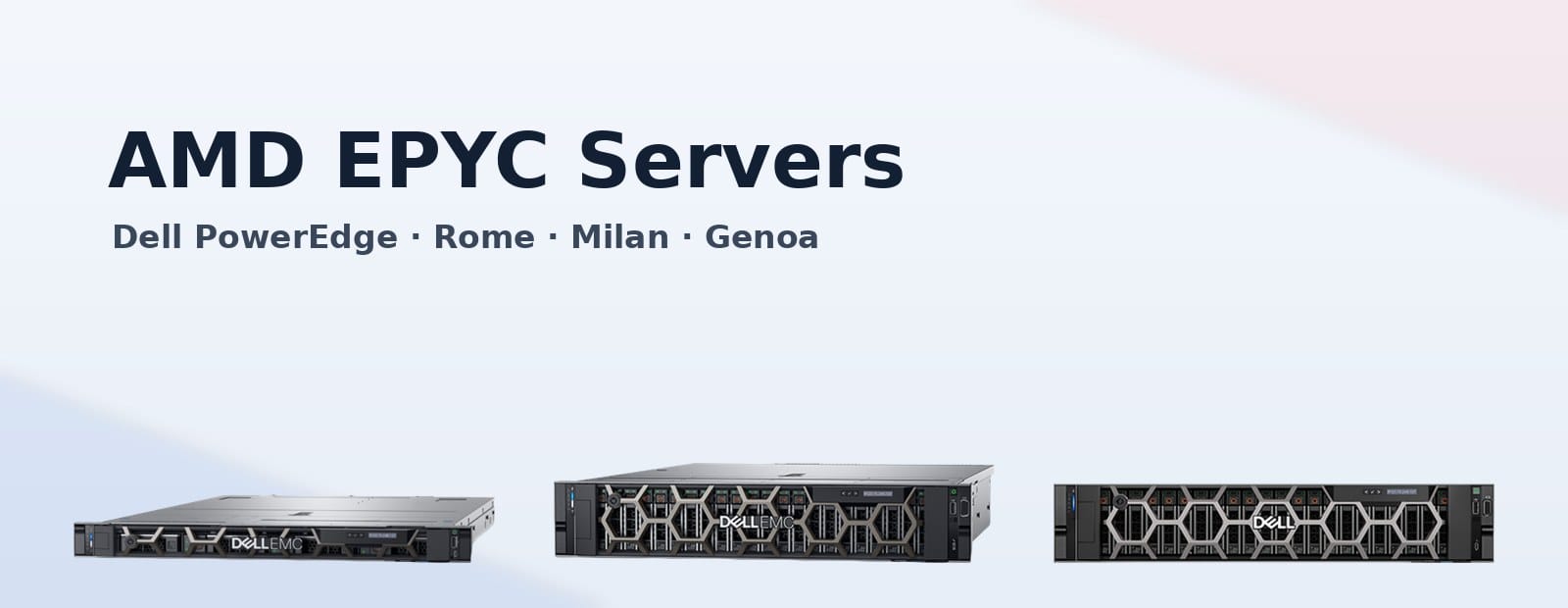
AMD EPYC servers Rome, Milan, Genoa and Turin platforms
Request a protected quotation
Send your target configuration or workload description. We reply within one business day with a part-level PI, written warranty terms, the export document set and a staged payment plan.
Or email info@sell-server.com.
Frequently asked questions
Is it safe to buy servers from a supplier in China?
Yes, when the supplier can be verified. Insist on factory-sealed stock with intact seals, service tags you can check on the manufacturer support site, a part-level proforma invoice, a written warranty, staged or escrowed payment, and complete export documents. Deals that go wrong almost always skip one of these checks.
How do I verify that a Dell server is genuinely new?
Check the Service Tag on Dell’s support site for warranty status, ship date and original configuration, and match it against the packing list. Ask for the tag list and photos of intact factory seals before the balance payment, and inspect the carton seals and labels on arrival before signing for the shipment.
What is the safest payment method for a first server order?
Avoid paying the full amount upfront. Use a deposit plus a balance released against the service-tag list, inspection evidence or a copy of the bill of lading. For large first orders, escrow or a letter of credit ties payment to documented delivery, and you should always confirm the beneficiary name matches the contracted company and its domain.
What is the warranty difference between new production and sealed NOS?
Current production servers carry the manufacturer warranty. Factory-sealed New Old Stock is new, unopened hardware from an earlier generation and carries a supplier-backed warranty instead. Both the new and sealed NOS systems we supply are covered in writing for three years, with a defined RMA path.
What export documents should come with a server shipment?
Expect a commercial invoice, a packing list with HS codes, the correct declared value, and a certificate of origin where your customs authority requires one. The incoterm (FOB, CIF or DDP), the party handling export clearance and freight, and the lead time should all be confirmed on the proforma invoice, with export-grade palletized packaging.
How do I avoid a configuration bait-and-switch?
Require the full CPU model and stepping, every DIMM part number and slot layout, the exact RAID controller, backplane and drive count, NIC or OCP card, and PSU wattage on the proforma invoice. On arrival, compare the machines to the packing list and to the BIOS and iDRAC inventory before signing.
Do you ship to my country, and who handles customs and lead time?
We export to Europe, Southeast Asia, the Middle East and the CIS. Your quotation states the incoterm, who arranges export clearance and freight, and the lead time in writing, so the division of responsibility for customs is clear before the order is confirmed.
Trademarks appear solely for product identification. Last reviewed 2026-09-19.

WeChat
Scan the QR Code with wechat