 serverbastion.com

17TH GENERATION · 2U STORAGE
Dell PowerEdge R570
2U single-socket rack server built around drive capacity
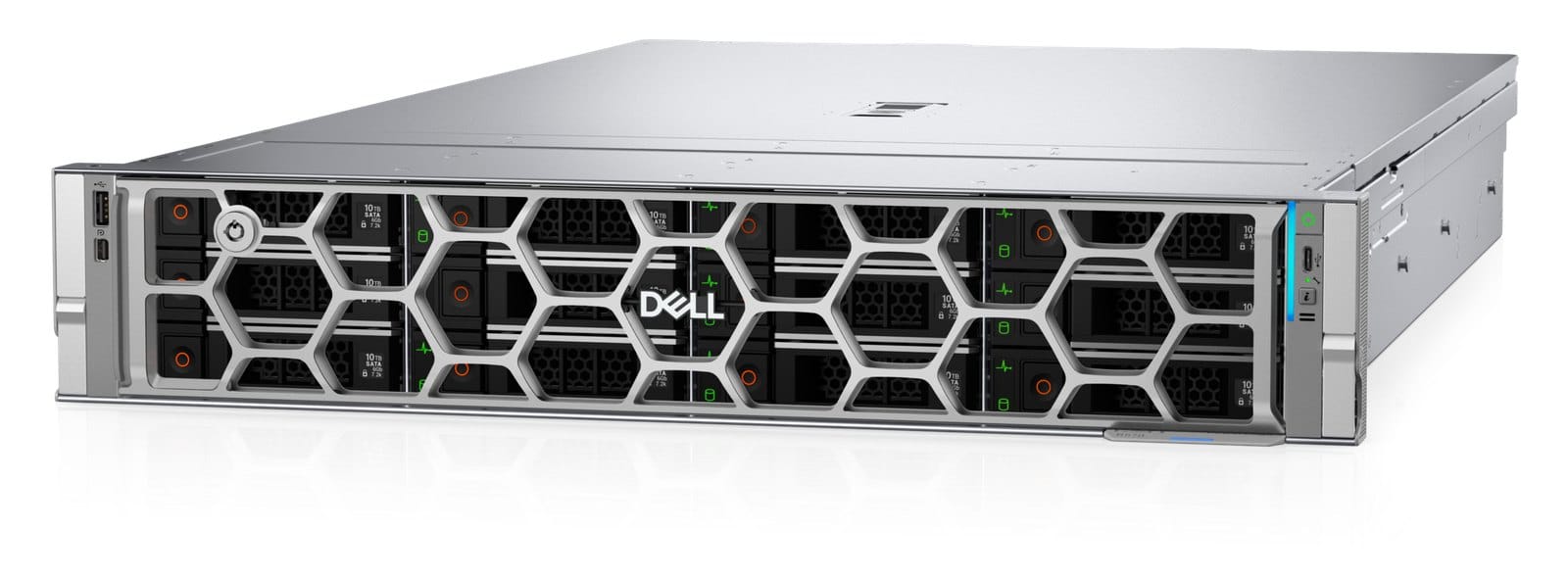
The Dell PowerEdge R570 is the capacity-focused member of Dell’s 17th-generation family. Where the 1U R470 trades depth for rack density, the R570 uses a 2U chassis to do the opposite: it holds up to 12 large 3.5-inch drives (384 TB in a single SATA RAID array) or, on the all-flash side, up to 32 front E3.S Gen5 NVMe devices (up to 1966.08 TB) plus four more at the rear. One Intel Xeon 6 processor — E-core for core count, P-core for frequency — drives it all under a single software licence. The result is a storage-dense, single-socket node for software-defined storage, scale-out databases, medium-density virtualisation and VDI.
Choose the backplane: capacity or all-flash
The R570 is ordered around one of several front backplanes, so the first decision is the media — not the CPU. These are the factory configurations from the Dell specification sheet:
12 × 3.5-inch
- Up to 384 TB per SATA RAID array
- SATA enterprise HDD
- Ideal for bulk, backup, archive and SDS
8 / 16 / 32 × E3.S
- Up to 1966.08 TB with 32 × E3.S
- PCIe Gen5 NVMe, hot- or cold-aisle
- Up to 4 extra rear E3.S (245.76 TB)
8 / 16 / 24 × 2.5-inch
- Up to 24 SATA/Universal drives (92.16 TB)
- 8 × 2.5" NVMe option available
- Balanced tiered storage
BOSS-N1 M.2
- Up to 2 × M.2 NVMe for the OS
- Separates boot from data drives
- PERC H365i / H965i for data RAID
Specifications at a glance
E-core or P-core for a storage node
Throughput & density
Up to 144 efficiency cores with high memory capacity (1 TB RDIMM). Best for software-defined storage, scale-out databases and many parallel VMs where aggregate throughput beats per-core speed.
Frequency & latency
Up to 86 performance cores at higher clock, with up to 4 TB when the R1S option is selected. Best for latency-sensitive databases, VDI and licensed software priced per host.
How it compares
Condition
Brand-new, current-production units supplied as new with the full 3-year warranty from Beijing Xinchuan Technology Co., Ltd.
Testing
Each server is assembled, BIOS/firmware updated and stress-tested in our workshop before dispatch, with iDRAC logs available on request.
Warranty
A 3-year warranty covering parts and replacement, backed by responsive technical support from our team for the full term.
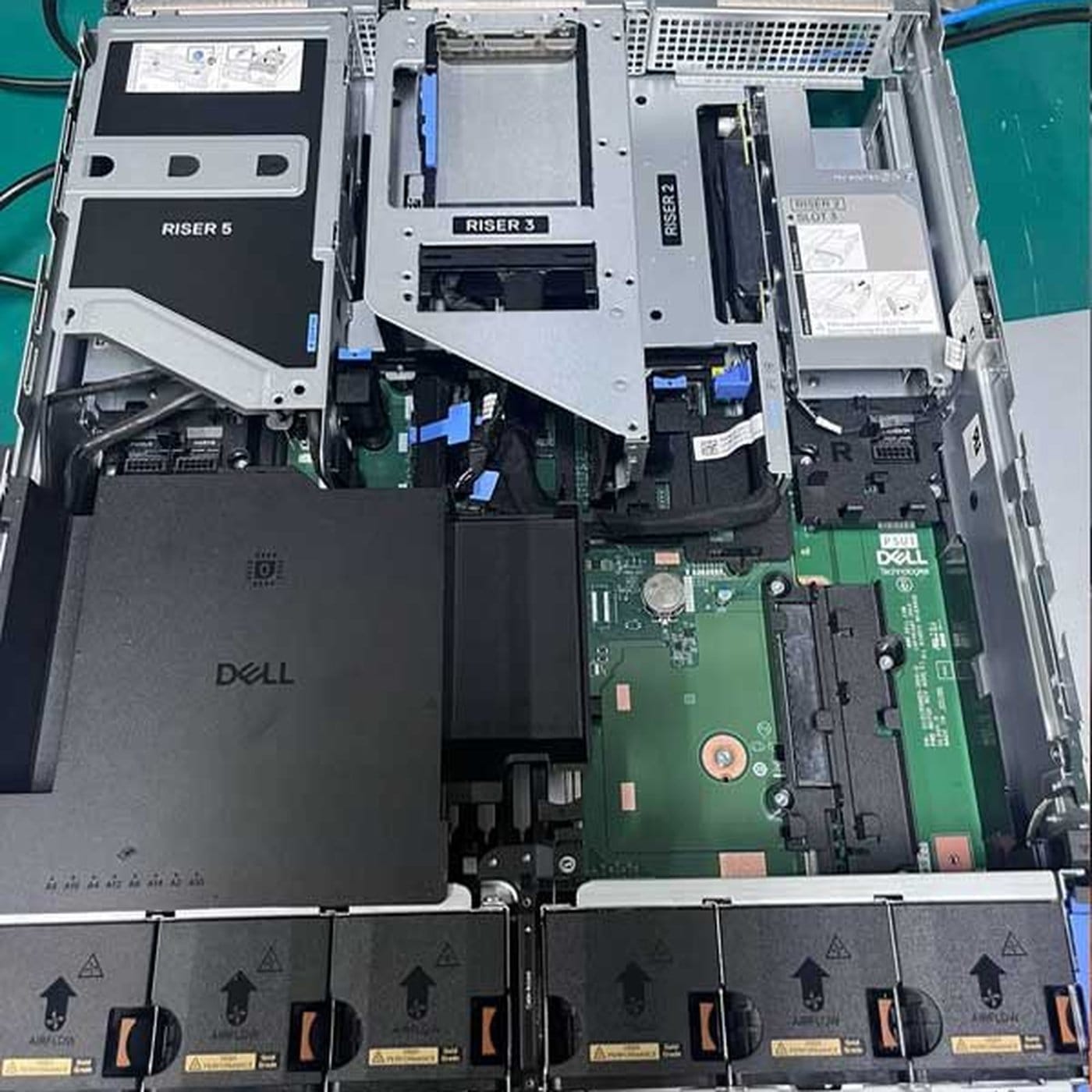
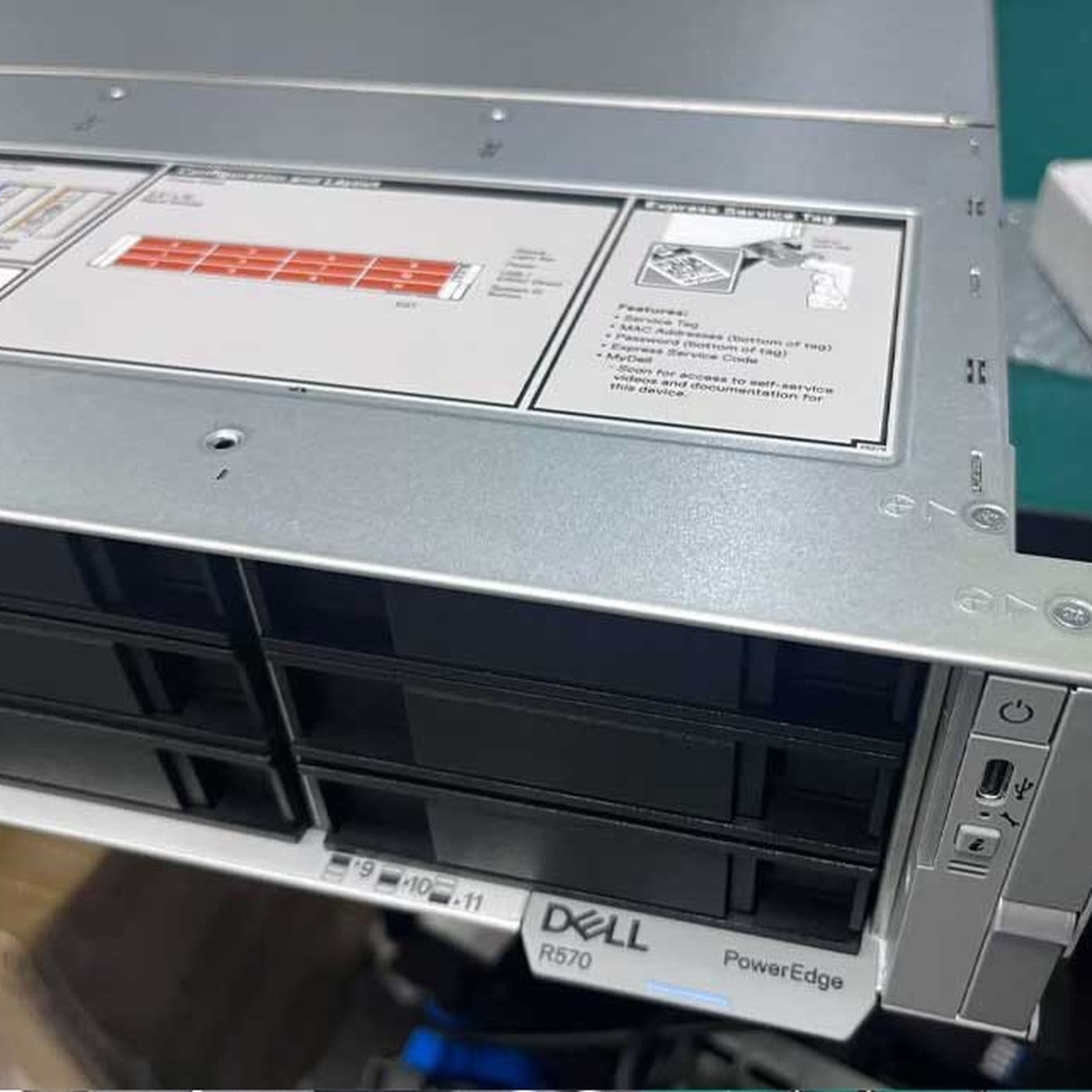
Real units from our workshop
Where the R570 fits
- Software-defined storage nodes that need many bays under one licensed socket.
- Scale-out and distributed databases with high per-node core counts.
- Medium-density virtualisation and VDI hosts for branch and regional deployments.
- Backup, archive and bulk capacity on 12 × 3.5" drives.
- Inference and GPU-accelerated workloads with up to three 400W accelerators.
Get a configured R570 quote
Tell us your target capacity, drive type (LFF HDD or E3.S NVMe), preferred Xeon 6 core architecture and GPU needs. We return a build sheet with confirmed SKUs, lead time and export pricing within one working day.
R570 questions & answers
Is the R570 single-socket or dual-socket?
It is a single-socket server with one Intel Xeon 6 processor. This keeps per-socket software licensing to one node while still offering up to 144 cores, which is why it is popular for storage and virtualisation hosts.
What is the maximum storage capacity of the R570?
On spinning media it supports up to 12 × 3.5-inch SATA drives for 384 TB in a single RAID array. On all-flash E3.S Gen5 NVMe it supports up to 32 front devices (up to 1966.08 TB) plus up to four rear E3.S devices (245.76 TB).
What is the difference between the R570 and R470?
Both are 17th-generation single-socket servers on the same Xeon 6 choices. The R470 is a compact 1U for density, while the R570 is a 2U built for drive capacity, with far more bays and support for three 400W double-width GPUs.
How many GPUs can the R570 hold?
According to the Dell specification sheet, up to three 400W double-width accelerators or up to four 75W single-wide accelerators. Confirm exact accelerator compatibility for your chosen SKU when requesting a quote.
Should I choose an E-core or P-core Xeon 6?
Choose E-core (up to 144 cores) for storage throughput, scale-out databases and many VMs. Choose P-core (up to 86 cores, up to 4 TB with R1S) for higher frequency and lower latency on transactional databases and VDI.
What memory does the R570 support?
It has 16 DDR5 DIMM slots running up to 6400 MT/s and accepts registered ECC RDIMMs only. Maximum memory is 1 TB on E-core and 4 TB on a P-core R1S configuration. MRDIMM 8000 is not supported.
What warranty comes with a new R570?
A 3-year warranty provided by Beijing Xinchuan Technology Co., Ltd., covering parts and replacement with technical support for the full term.

WeChat
Scan the QR Code with wechat