 serverbastion.com

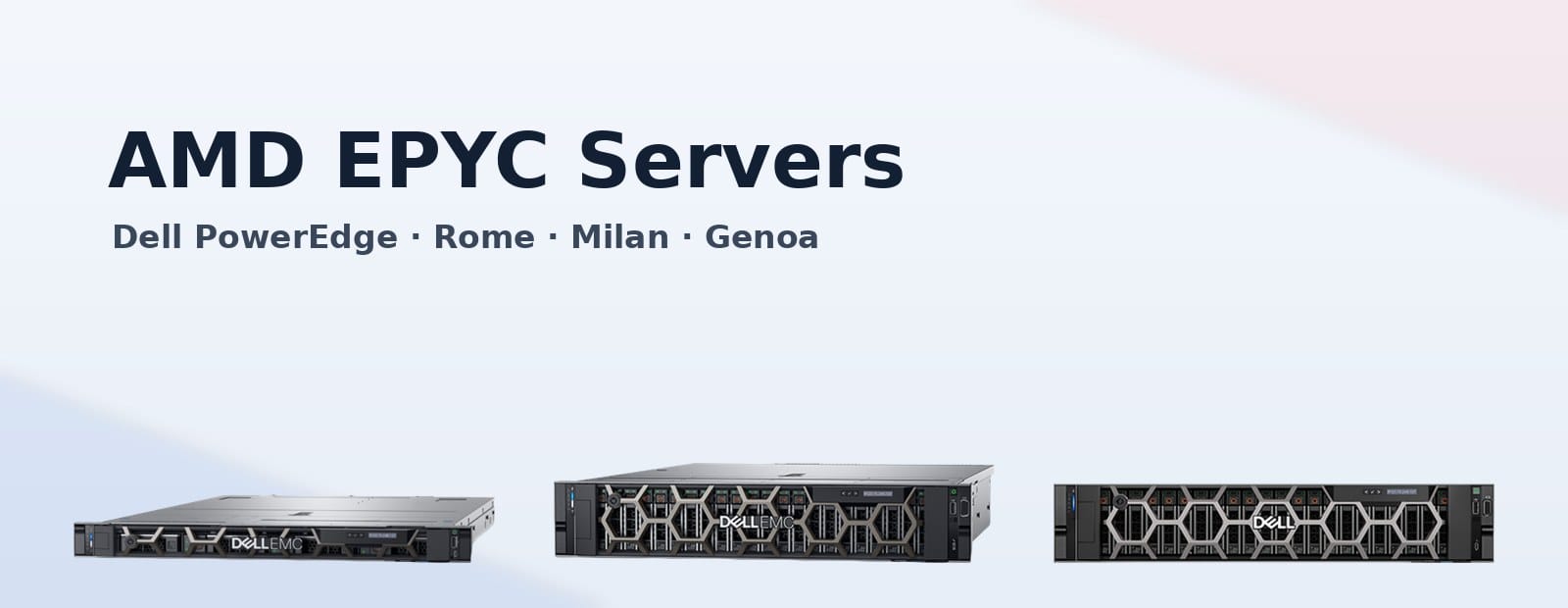
Single-Socket EPYC Dell PowerEdge Servers
Why a Single-Socket EPYC Server?
A single modern EPYC processor delivers the core count that required two sockets only a generation ago. That changes server economics wherever software is billed per physical core or per socket: instead of licensing, powering and cooling two CPUs, one high-core socket often covers the same workload. It is the simplest way to buy dense compute without paying for a second licensed socket you do not need.
- Lower per-core software licensing. SQL Server, Oracle Database, Windows Server and some VDI/hypervisor products charge per physical core. A workload that fits on one socket is licensed once — with roughly half the DIMMs, PSUs and software-socket entitlements of a comparable dual-socket starting point.
- Power and cooling. One CPU socket to feed and cool, a smaller baseline DIMM population and a simpler power profile — meaningful across large fleets and edge closets alike.
- Memory simplicity. A single memory subsystem means one memory map and no cross-socket bandwidth or NUMA placement to design around.
- One-socket manageability. One processor baseline to firmware and patch, simpler VM placement and fewer parts for remote or small-team sites.
- The core-density progression. One EPYC socket moved from 32 cores (14G Naples) to 64 (15G Rome/Milan), 128 (16G Genoa) and 160 (17G Turin). A single Turin socket now out-cores many dual-socket deployments from the Naples era.
Single-Socket EPYC Servers Available
Five single-socket models make up our current offering across three generations: the new 17G R7715 and R6715, the new 16G R7615, and factory-sealed 15G NOS in the R7515 and R6515.
Dell PowerEdge R7715 — 2U Single EPYC 9005 Turin
Our flagship single-socket 2U: up to 160 Zen 5 cores in one CPU with DDR5-5200, up to 40× E3.S Gen5 and three double-width GPUs — maximum one-socket expansion with the lowest licensed-core count for heavy 2U builds.
- 2U, 1 × EPYC 9005 Turin (up to 160 cores)
- 24× DDR5-5200 RDIMM, up to 6 TB
- Up to 40× E3.S front (no rear bays)
- 3× double-width (450 W-class) + 6× 75 W GPUs
Dell PowerEdge R6715 — 1U Single EPYC 9005 Turin
Dense 1U on one Turin socket: up to 160 cores with DDR5-5200 and up to 22 E3.S bays in a single CPU — a one-socket alternative to older dual-socket 1U fleets for per-core-licensed hosts.
- 1U, 1 × EPYC 9005 Turin (up to 160 cores)
- 24× DDR5-5200, up to 3 TB
- Up to 22× E3.S total (20 front + 2 rear)
- Up to 3× 75 W single-width GPUs
Dell PowerEdge R7615 — 2U Single EPYC 9004
Current single-socket 2U on EPYC 9004 Genoa/Genoa-X: up to 128 cores with DDR5, up to 32× E3.S Gen5 and three double-width GPUs for a long-life one-socket fleet. Available to order.
- 2U, 1 × EPYC 9004 (up to 128 cores, 9754)
- 12× DDR5-4800 RDIMM, up to 3 TB
- Up to 32× E3.S Gen5 front
- 3× double-width (300 W-class) or 6× 75 W GPUs
Dell PowerEdge R6515 — 1U Single EPYC
Compact 1U Rome/Milan: up to 64 cores and up to 10 front NVMe drives in one sealed NOS socket — value virtualization, edge and single-rack cluster hosts.
- 1U, 1 × EPYC 7002/7003 (up to 64 cores)
- 16× DDR4-3200, up to 2 TB
- Up to 10× front NVMe (no rear bays)
- Up to 2× 75 W single-width GPUs (e.g. T4)
Dell PowerEdge R7515 — 2U Single EPYC
One high-core EPYC in a 2U chassis: up to 64 Rome/Milan cores, up to 24 front NVMe and four single-width GPUs — the licensing-efficient sealed NOS pick for storage and value virtualization.
- 2U, 1 × EPYC 7002/7003 (up to 64 cores)
- 16× DDR4-3200, up to 2 TB (RDIMM/LRDIMM)
- Up to 24× front NVMe (no rear bays)
- Up to 4× 75 W single-width GPUs (e.g. T4)
The new 16G R7615 and R6615 and the sealed 15G R6515 are supplied on request via Request a Quote. The 14G R6415 and R7415 (EPYC 7001 Naples, 2017) are the first single-socket EPYC generation and are not offered today. For every rack model across all four generations, see our complete AMD EPYC PowerEdge model list.
From 14G to 17G: Four Generations, One Socket
Single-socket EPYC has changed in scale four times, and each step made the one-socket build more capable:
- 14G (2017) — EPYC 7001 Naples. The R6415 (1U) and R7415 (2U) were the first single-socket EPYC PowerEdge servers, with a 32-core ceiling, DDR4-2666 and PCIe Gen3. Capable in their era, they are legacy machines now and are not part of our current new or NOS offering.
- 15G — EPYC 7002 Rome / 7003 Milan. The ceiling doubled to 64 cores and the platform moved to DDR4-3200 and PCIe Gen4, in the R6515 (1U) and R7515 (2U). We supply these only as factory-sealed New Old Stock.
- 16G — EPYC 9004 Genoa/Genoa-X. The ceiling jumped to 128 cores with DDR5-4800, PCIe Gen5 and E3.S Gen5 bays, in the new R6615 (1U) and R7615 (2U).
- 17G — EPYC 9005 Turin. Up to 160 cores with DDR5-5200 in the new R6715 (1U) and R7715 (2U), with up to 22 E3.S bays in 1U and 40 in the 2U flagship.
Single-Socket EPYC Servers Compared
| Model | Form | CPU / max cores | Memory | Max NVMe / E3.S | GPU |
|---|---|---|---|---|---|
| PowerEdge R7715 | 2U | 1× EPYC 9005 Turin · 160 | 24× DDR5-5200, up to 6 TB | Up to 40× E3.S front | 3× double-width (450 W-class) + 6× 75 W |
| PowerEdge R6715 | 1U | 1× EPYC 9005 Turin · 160 | 24× DDR5-5200, up to 3 TB | Up to 22× E3.S (20 front + 2 rear) | Up to 3× 75 W single-width |
| PowerEdge R7615 | 2U | 1× EPYC 9004 Genoa · 128 | 12× DDR5-4800, up to 3 TB | Up to 32× E3.S Gen5 front | 3× double-width (300 W-class) or 6× 75 W |
| PowerEdge R6615 | 1U | 1× EPYC 9004 Genoa · 128 | 12× DDR5-4800, up to 3 TB | Up to 16× E3.S front (+2 rear) | 2× 75 W single-width |
| PowerEdge R7515 | 2U | 1× EPYC 7002/7003 · 64 | 16× DDR4-3200, up to 2 TB | Up to 24× front NVMe | Up to 4× 75 W single-width (e.g. T4) |
| PowerEdge R6515 | 1U | 1× EPYC 7002/7003 · 64 | 16× DDR4-3200, up to 2 TB | Up to 10× front NVMe | Up to 2× 75 W single-width (e.g. T4) |
| PowerEdge R7415 legacy · not in current offering | 2U | 1× EPYC 7001 Naples · 32 | 16× DDR4-2666, up to 1 TB LRDIMM | Up to 24× front NVMe | — |
| PowerEdge R6415 legacy · not in current offering | 1U | 1× EPYC 7001 Naples · 32 | 16× DDR4-2666 (512 GB RDIMM / 1 TB LRDIMM) | Up to 10× front NVMe | — |
1U vs 2U Single-Socket: How to Choose
The socket is the same; the chassis decides density versus expansion.
| 1U single-socket | 2U single-socket | |
|---|---|---|
| Models | R6715 (new 17G), R6615 (new 16G), R6515 (sealed 15G NOS), R6415 (legacy) | R7715 (new 17G), R7615 (new 16G), R7515 (sealed 15G NOS), R7415 (legacy) |
| Best fit | Rack density: licensed virtualization hosts, edge and cluster nodes | Storage and acceleration: all-flash SDS, database, GPU and VDI hosts |
| Storage ceiling | Up to 22× E3.S on the R6715 (20 front + 2 rear) | Up to 40× E3.S on the R7715; 32 on the R7615; 24 front NVMe on the R7515 |
| GPU | 75 W single-width only (up to 3) | Double-width on R7715/R7615 (up to 3), plus up to 6 single-width on the R7715 |
Who Should Pick One Socket?
- Per-core-licensed database and ERP teams. SQL Server and Oracle estates reach the minimum licensed-core count on a single high-core EPYC, with no second socket to entitle.
- SMB, ROBO and edge virtualization. One 160-core Turin host in 1U or 2U replaces older dual-socket infrastructure with one simpler machine to maintain.
- Storage and SDS nodes. Up to 40 E3.S bays (R7715), 32 (R7615) or 24 front NVMe (R7515) behind one socket for vSAN, Ceph, Proxmox and backup targets.
- VDI and inference on single-width accelerators. 75 W-class cards fit across the line — up to six in the R7715, four in the R7515 and three in the R6715.
- Cost-sensitive fleet refreshes. Sealed 15G NOS R7515/R6515 units add Rome/Milan capacity under one warranty while budgets stay tight.
Move to a dual-socket build only when you need more than 160 cores in one host, the maximum DIMM count and memory bandwidth, or the widest GPU/HPC configuration — our AMD EPYC server hub covers the dual-socket range. If one socket meets the core target, it is normally the lower total-cost build.
Condition, Testing and Warranty
Every single-socket server we supply is new and factory-sealed. The 17G R6715/R7715 and 16G R6615/R7615 ship with a 3-year manufacturer warranty. The sealed 15G R6515 and R7515 are new, unopened inventory clearly identified as New Old Stock and carry a full 3-year warranty backed directly by us, so coverage does not depend on the original build date. Before shipment each configured build is assembled, BIOS/firmware baselined and stress-tested across CPU, memory and drives, and we confirm chassis revision, controller and PSU rating with the order. Read more about what New Old Stock means and the full warranty terms. The 14G R6415 and R7415 are not offered in any condition.
Batch Orders and Export
Single-socket EPYC builds are among our most-requested fleet platforms for per-core-licensed estates. Multi-unit orders receive identical CPU steppings, matched DIMM layouts, same-batch drives and standardized iDRAC firmware, palletized for export with documentation support. Send destination, incoterm and target configuration — core count, RAM, storage, networking, quantity — and we reply within one business day with a configured build, firm channel price and lead time.
Why Buy from Us?
- Configured to your workload — we quote the exact CPU SKU, DIMM map, controller and backplane for the one-socket build you need, not a generic listing.
- New and sealed with a 3-year warranty — current 17G/16G production and sealed 15G NOS alike, tested and documented before shipment.
- Batch-ready and export-experienced — matched revisions, palletized shipping and export documentation for Europe, Southeast Asia, the Middle East and the CIS.
- Independent multi-brand supply — Dell, Lenovo, xFusion, Inspur and Huawei from one engineering-led B2B supplier.
Frequently Asked Questions
What is a single-socket EPYC server?
A single-socket server has one CPU socket populated with one AMD EPYC processor instead of two. On the PowerEdge line the family runs from the sealed 15G R6515 and R7515, through the new 16G R6615 and R7615, to the newest 17G R6715 and R7715. Because one modern EPYC holds 64 to 160 cores, a single socket frequently covers workloads that previously required two older CPUs, with less software, memory and power to provision. The 14G R6415 and R7415 were the first members of the family and are legacy only.
Does a single-socket EPYC server save on software licensing?
It can, substantially, when software is priced per physical core or per socket. SQL Server, Oracle Database, Windows Server and some VDI and hypervisor products charge by the cores you license, so a workload that fits on one 160-core Turin carries fewer licensed cores than the same workload spread across two sockets. One socket also means fewer DIMMs, fewer power supplies and fewer software-socket entitlements at purchase and at renewal. Confirm the exact licensing metric with your software vendor, since core-limited editions can change the math.
How many cores can one EPYC socket provide?
Across the four single-socket generations the ceiling moved from 32 to 64 to 128 to 160 cores: 14G EPYC 7001 Naples (R6415, R7415) tops out at 32 cores with DDR4-2666; 15G Rome/Milan (R6515, R7515) reaches 64 cores with DDR4-3200 and PCIe Gen4; 16G Genoa (R6615, R7615) reaches 128 cores with DDR5-4800 and PCIe Gen5; and 17G Turin (R6715, R7715) reaches 160 cores with DDR5-5200.
How do I choose single-socket vs dual-socket EPYC?
Choose one socket when a single EPYC meets your core target, because you license, power and cool one CPU and can start with a smaller DIMM count. Choose dual-socket when you need more than 160 cores in a single host, the maximum DIMM count and memory bandwidth, or the widest GPU and PCIe configuration for HPC. If one socket covers the specification, it is normally the lower total-cost build.
1U or 2U single-socket — which chassis fits?
1U models — the R6715, R6615, R6515 and legacy R6415 — prioritize rack density and accept only 75 W single-width GPUs; the R6715 still offers up to 22 E3.S bays (20 front, 2 rear). 2U models — the R7715, R7615, R7515 and legacy R7415 — prioritize storage and acceleration: up to 40 E3.S on the R7715, 32 on the R7615 and 24 front NVMe on the R7515, with double-width GPU support on the R7715 and R7615.
Are the sealed 15G single-socket servers New Old Stock?
Yes. The R7515 and R6515 we offer are genuine new, unopened, factory-sealed inventory clearly identified as New Old Stock — not decommissioned, returned or previously deployed equipment. They run EPYC Rome/Milan with DDR4-3200 and PCIe Gen4, which still covers mainstream virtualization, database and storage workloads, and they carry a full 3-year warranty.
How do I get a quote for a single-socket EPYC server?
We quote configured builds rather than generic list prices: tell us the model, CPU SKU, memory, drives, controller, networking and quantity, and we reply within one business day with a configured build, channel price, lead time and warranty confirmation. Use Request a Quote, email or WhatsApp. For models without a dedicated page — R7615, R6615 and R6515 — the contact route is the fastest way to a build sheet.
Prefer email? Write to info@sell-server.com or message WhatsApp +86 18001060290. We reply within one business day.
AMD, EPYC, Naples, Rome, Milan, Genoa, Turin and Zen are trademarks of Advanced Micro Devices, Inc.; Dell and PowerEdge are trademarks of Dell Inc. Trademarks appear solely for product identification. Servers are sold and warranted by Beijing Xinchuan Technology Co., Ltd. This page was last reviewed on 2026-09-19.

WeChat
Scan the QR Code with wechat